- Colorado Avalanche: Axel Elofsson
- Previously: Mikhail Gulyayev
- Columbus Blue Jackets: Jackson Smith
- Previously: Cayden Lindstrom
- Dallas Stars: Cameron Schmidt
- Previously: Cameron Schmidt
- Detroit Red Wings: Carter Bear
- Previously: Michael Brandsegg-Nygård
- Edmonton Oilers: Isaac Howard
- Previously: Isaac Howard
- Florida Panthers: Sandis Vilmanis
- Previously: Gracyn Sawchyn
- Los Angeles Kings: Elton Hermansson
- Previously: Liam Greentree
- Minnesota Wild: Charlie Stramel
- Previously: Charlie Stramel
- Montreal Canadiens: Michael Hage
- Previously: Michael Hage
- Nashville Predators: Wyatt Cullen
- Previously: Brady Martin
- New Jersey Devils: Anton Silayev
- Previously: Anton Silayev
- New York Islanders: Malte Gustafsson
- Previously: Victor Eklund
- New York Rangers: Gabe Perreault
- Previously: Gabe Perreault
- Ottawa Senators: Carter Yakemchuk
- Previously: Carter Yakemchuk
- Philadelphia Flyers: Porter Martone
- Previously: Porter Martone
- Pittsburgh Penguins: William Horcoff
- Previously: William Horcoff
- San Jose Sharks: Ivar Stenberg
- Previously: Michael Misa
- Seattle Kraken: Chase Reid
- Previously: Jake O’Brien
- St. Louis Blues: Tynan Lawrence
- Previously: Justin Carbonneau
- Tampa Bay Lightning: Benjamin Rautiainen
- Previously: Sam O’Reilly
- Toronto Maple Leafs: Gavin McKenna
- Previously: Ben Danford
- Utah Mammoth: Tij Iginla
- Previously: Caleb Desnoyers
- Vancouver Canucks: Caleb Malhotra
- Previously: Braeden Cootes
- Vegas Golden Knights: Trevor Connelly
- Previously: Trevor Connelly
- Washington Capitals: Ilya Protas
- Previously: Andrew Cristall
- Winnipeg Jets: Viggo Björck
- Previously: Brayden Yager
For every NHL team, prospects are always coming and going. As they finish off their junior, college careers or make the jump over from their European leagues, they all have the same goal, to someday leave their mark on the NHL. The pressure and attention surrounding these players is magnified if they are going to be a real crucial piece for their respective franchises for years to come.
With the 2026-27 season is just around the corner, some of the top prospects in the NHL have kept their title as their team’s top prospect while others have moved on to the NHL or have been dethroned by another within their system.

Much like the top 100 prospects article, this ranking is going to be based on the quality and potential of each team’s prospect pool. Players are listed in no particular order. I will be using The Athletic’s Scott Wheeler’s definition of “prospect” for this which is as follows: “To be considered a prospect, a skater must be under 23 and not fully established with his NHL club,” (Scott Wheeler, Top 100 Drafted Prospects Ranking: McKenna, Stenberg, Martone lead summer 2026 list, July 14, 2026).
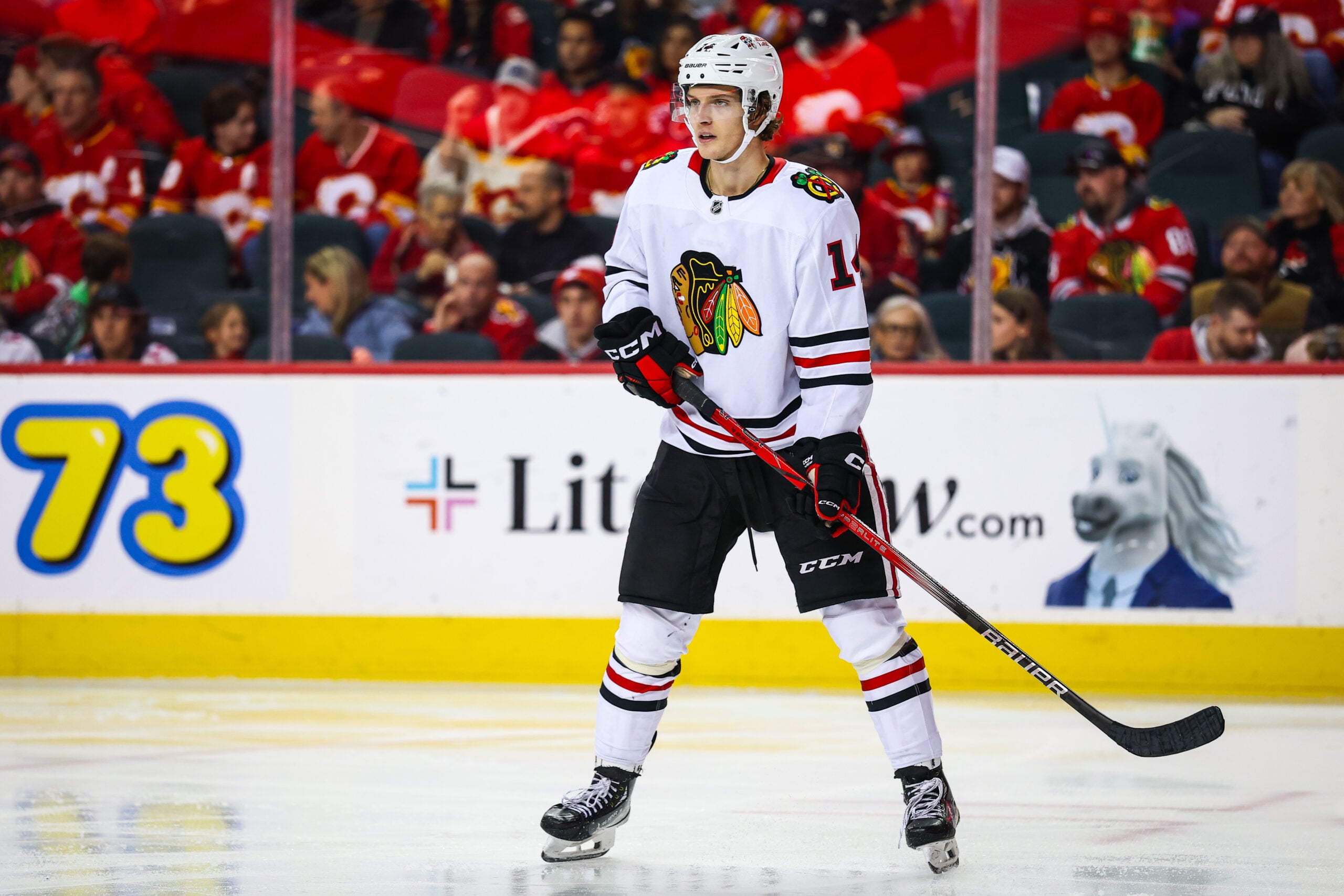
Anton Frondell is a two-way center who is built for the pro game. His size, shot, and two-way consistency make him a great bet to help steady the top-six forward group for the Chicago Blackhawks in the near future. Frondell racked up points at a remarkable rate for his age in the Swedish Allsvenskan as a draft eligible and was great again in the SHL last season. He made his NHL debut at the end of the 2025-26 season and looked strong, with his ability to protect the puck against bigger and older competition serving him well with the Blackhawks.
Colorado Avalanche: Axel Elofsson
Previously: Mikhail Gulyayev
Axel Elofsson is a right shot defender whose offensive potential is great enough to somewhat outweigh his physical and defensive weaknesses. Elofsson is 5-foot-10 and doesn’t play very physically, so it’s unlikely that he becomes a trusted defender in the NHL. However, his offensive game is genuinely strong, with good enough skating and playmaking to project as a power play piece at higher levels. Elofsson is set to play in Sweden’s second-tier pro league, HockeyAllsvenskan, on loan to IK Oskarshamn.
Columbus Blue Jackets: Jackson Smith
Previously: Cayden Lindstrom
Jackson Smith is a big defender (6-foot-3) who has shown enough offensive skill to establish himself as a high-potential defenseman despite having a defensive game with some warts. He doesn’t project as an elite offensive type, but his offensive tools are still very strong. Smith’s ability to make stretch passes and anticipate routes of his teammates pairs really well with his strong skating and large frame. Smith has shown some clever playmaking from the backend, and has a heavy shot that he can use to cause a bit of havoc in the offensive zone. He could be a second-pairing defenseman with room to grow on both ends of the ice.
Dallas Stars: Cameron Schmidt
Previously: Cameron Schmidt
Cameron Schmidt has been a very polarizing player in the prospect world as a very undersized winger who is a high-end skater with a ton of offensive skill. If he were 6-feet tall he almost certainly would have been in the conversation in the 10-16 range of the 2025 Draft, but coming in at just 5-foot-8, his size was a major reason that he fell late into the third round. Schmidt will need to outwork much larger opponents if he wants to succeed in the NHL, and he has shown a high enough compete level to be a real menace someday. He has a dangerous shot that allowed him to score 51 goals in the WHL last season, the most in the league.
Detroit Red Wings: Carter Bear
Previously: Michael Brandsegg-Nygård
Carter Bear was a major riser in the 2025 Draft, and was one of the WHL’s top scorers before he sustained a skate laceration on his leg that took him out of the final months of his draft year. He’s got good strength for a teenager, making him a bit of a wrecking ball against junior competition. Bear showed that he could drive play and score consistently, with 99 points between the regular season and playoffs in 2025-26. His compete level is his biggest strength in my opinion, carrying the puck into the middle of the ice and causing chaos with his seemingly endless energy.
Edmonton Oilers: Isaac Howard
Previously: Isaac Howard
After a very disappointing freshman season with the University of Minnesota-Duluth, Isaac Howard was a leading offensive player in the NCAA for two seasons following his transfer to Michigan State University. Howard is a bit undersized (measures around 5-foot-10/11), but has a strong enough frame that he’s not as easy to knock off of pucks as you might expect.
While he’s a good skater, Howard’s skill is his defining trait, making defenders miss their checks and leaving a lot of opponents reaching in. Howard has had difficulties creating plays for himself at the pro level and Edmonton’s bottom-six isn’t exactly full of high-end players for him to work with. There’s quite a bit of boom or bust potential in Howard’s projection at this point, especially considering the centers he could end up playing with if he can begin to match their pace a bit.
Florida Panthers: Sandis Vilmanis
Previously: Gracyn Sawchyn
Sandis Vilmanis is a speedy winger who plays very hard. Villains had an excellent second season in the AHL with the Charlotte Checkers last year, scoring at a high enough rate that I’m confident his offense will translate to an NHL middle-six. He was also a star for Team Latvia at the World Championship this summer, scoring 11 points in eight games to lead the team. Vilmanis plays a very direct style of play that isn’t going to win any awards, but should become a trusted piece for the Panthers next season, likely in the bottom six.
Los Angeles Kings: Elton Hermansson
Previously: Liam Greentree
Elton Hermansson is a very talented winger with the type of skill set you often see in good offensive top-six wingers in the NHL. His compete and defensive IQ are not strengths, so if the offensive game doesn’t develop fully, then he is unlikely to earn a role outside of the top-six. However, Hermansson’s skill, shot, and playmaking are all strong enough that I think he could carve out a role for himself as an offense-first winger who stars on the power play.
Minnesota Wild: Charlie Stramel
Previously: Charlie Stramel
Charlie Stramel’s development hasn’t been a rollercoaster, but more of a yo-yo. After two years at the University of Wisconsin, Stramel’s stock was at its lowest, but he has bounced back remarkably since transferring to Michigan State University where he has re-established himself as not just a legitimate NHL prospect, but as a future middle six piece. Stramel is a big, physical center who competes hard and projects to supply the Wild with a bit of depth offense. With Marco Rossi being sent to Vancouver as part of the Quinn Hughes trade, there is a whole down the middle in Minnesota’s middle-six, and I think Stramel could play a role in their bottom six very soon.
Montreal Canadiens: Michael Hage
Previously: Michael Hage
Despite missing nearly all of his draft-1 season to injury, Michael Hage has re-established himself as a high end prospect, and was drafted 21st overall in the 2024 Draft. He has a really well-rounded tool kit as a 6-foot-1 center who skates well, has excellent skill with the puck and created chances at will in the USHL and NCAA over the past two and a half seasons. Hage competes well on defense and through traffic in the offensive zone, bobbing and weaving through checks with ease. He has enough offense to go with his phenomenal skating that Hage projects comfortably as the second line center for Montreal behind Nick Suzuki.
Nashville Predators: Wyatt Cullen
Previously: Brady Martin
Wyatt Cullen was always a super skilled wing prospect, but NHL teams were never going to take him particularly seriously due to his size. At the end of the 2024-25 season, Cullen measured at 5-foot-8 in the NTDP, but he finished his draft year at 6-foot-1 according NHL Central Scouting. That kind of growth has made him a legitimate NHL prospect, with his frame finally catching up to the remarkable talent he always possessed. Cullen can challenge defenders one-on-one a bit too often, but he has the skill to pull off ridiculous moves pretty regularly. He didn’t score a ton in his draft year for a player so skilled, but I think he deserves some patience considering the massive physical changes he was dealing with.
New Jersey Devils: Anton Silayev
Previously: Anton Silayev
Anton Silayev was the early story of the 2024 Draft, going from an unknown defender in Russia’s junior system the prior year to an elite defensive prospect who was tearing up the KHL. Silayev is 6-foot-7, but he moves like he’s 6-foot-2, and he has shown great defensive play across three full KHL seasons. He has completed the final season of his contract with Torpedo in the KHL, and has been signed by the New Jersey Devils.
Silayev’s combination of nearly unmatched length and incredibly smooth skating makes him a true outlier in the hockey world, and one capable of becoming a one-man defensive unit in his prime. He has room to grow offensively for sure, but even if he doesn’t become a consistent offensive presence, Silayev will be a very valuable player in his own end.
New York Islanders: Malte Gustafsson
Previously: Victor Eklund
Malte Gustafsson is a big two-way defensive prospect who is a bit raw, but shows the potential to be an excellent top-four defender on a good team. Gustafsson is 6-foot-5, and he uses his reach very well on the defensive side of the puck, putting pressure on attackers and giving himself plenty of time and space to react. He skates really well for his size, making him a consistent puck mover from zone-to-zone. Gustafsson’s offensive tools are good, but he won’t be running a top power play in the NHL anytime soon. His two-way play should make him a great stylistic foil to the Islanders’ young superstar Matthew Schaefer.
New York Rangers: Gabe Perreault
Previously: Gabe Perreault
Gabe Perrault continues to look like someone who will be a power play specialist at the next level with great skill and smarts in the offensive zone. He can pick apart opposing defenses with pin-point passes, creative dangles and sly fakes, and his effort level is admirable. Perreault was one of the most creative and intelligent players from the 2023 Draft and he is great at weaving his way out of trouble when defenders collapse around him, either with a pass or his lightning-quick hands.
Perreault scored at an absurd rate in the NCAA, with 108 points in just 73 career games. He was also a huge piece of Team USA’s offense in each of their back-to-back gold medal victories at the World Junior Championship. Perreault had such a terrific start to the 2025-26 season in the AHL that he ended up on the Rangers’ NHL team for the rest of the year.
Ottawa Senators: Carter Yakemchuk
Previously: Carter Yakemchuk
Carter Yakemchuk has an enviable physical makeup as a right-shot defender who already measures at 6-foot-4 (was 6-foot-2 to start his draft year), 207 pounds and he has produced a ton of offense at the junior level. Yakemchuk challenges opposing players one-on-one like a forward, constantly setting himself up for incredible dekes.
The problem is, he doesn’t succeed 100% of the time and can put himself in tough positions to recover defensively when things go wrong. He has the length and strength to be a strong defender, but a quicker skating stride would likely help him become a difference maker on the back-end as well. If Yakemchuk can continue to develop his skating and decision making, then he has all the makings of an offensive number one defender.
Philadelphia Flyers: Porter Martone
Previously: Porter Martone
Porter Martone is a skilled power forward who dominated the OHL in his draft season. His size and high-end skill made him a handful for junior defenses, and I thought it was a great decision for him to move on to the NCAA last season with Michigan State University. Martone’s size is great and all (6-foot-3), but the real reason it excited scouts is his excellent playmaking, high-end compete level, and his great hands.
In the draft process, Martone compared himself to the Tkachuk brothers, and while I think he’s got a lot of their DNA as a high-skill power forward, he isn’t a pest like the Tkachuks. He battles hard for pucks and doesn’t back down from a challenge, but I’m not quite sure he has that Rat X-Factor to get under opponents’ skin.
Martone developed well in college last season, though nobody his emergence in the NHL coming. Through 19 games split between the regular season and the playoffs, Martone wasn’t just good enough to hang with his Flyers teammates, he was one of the best players they iced on a daily basis. He truly looked like the modern power forward, and I think he could become Philly’s best player as soon as next season.
Pittsburgh Penguins: William Horcoff
Previously: William Horcoff
William Horcoff is a beast of a hockey player. At 6-foot-5 and over 200 pounds, this 19-year-old has a lot more skill and a smoother shot than you’d typically expect of a big man. His skating is just okay, but he sees the ice well, with enough skill and IQ to project as a strong NHLer. Horcoff will likely struggle a bit with the pace of professional play at first, since his size and strength advantage in the NCAA gives him more time and space than the pros will ever give him. Regardless, I think there’s a chance he could end up as a good second line center.
San Jose Sharks: Ivar Stenberg
Previously: Michael Misa
Ivar Stenberg is an electric prospect who had an argument as the top prospect in the 2026 Draft. In the end, went second and landed with an extremely talented young San Jose Sharks team that went so far as to essentially open up his spot in the top six by trading away William Eklund. Stenberg had a remarkable draft year in Sweden’s top professional league, scoring 33 points in 43 games as an 18-year-old.
That doesn’t happen in the SHL, and to see it coming from a 5-foot-11 winger made it all the more surprising. The reasons Stenberg was so successful are many, but a few of the are his ability to maintain possession of the puck through contact, the sheer number of puck battles he wins along the boards, and his skill/shot combo that makes him a legitimate offensive threat on the power play and at even strength.
Stenberg is going to be a top line caliber winger in the NHL in the near future, with the competitiveness to hound opposing puck carriers on the forecheck and the vision to make tough passes under duress. I think his motor and hockey IQ would make Stenberg an excellent fit alongside Macklin Celebrini in San Jose, giving them another foundational piece of their very promising rebuild.
Seattle Kraken: Chase Reid
Previously: Jake O’Brien
Chase Reid is a skilled defenseman who has followed an unconventional and impressive development path so far. After starting the 2024-25 season in the NAHL, Reid made the jump to the OHL with the Soo Greyhounds. He was quite successful against improved competition and decided to spend his draft year with the Greyhounds where he was one of the very best players in the entirety of the OHL.
At 6-foot-2, Reid has the size that NHL teams look for, and while his defensive game has improved since his arrival in the OHL, the real calling card of his game is the offense. Reid never panics, finding ways out of trouble with his remarkably agile skating. He can barely eke his way out of trouble and then follow it up with a beautiful pass to an open teammate, creating offense out of nothing.
Reid has room to grow still, with less than two seasons in a premiere junior hockey environment under his belt. He is set to play for Michigan State where he is likely to be the team’s number one defender, playing big minutes in all situations. With further development physically and mentally, I think Reid will quickly establish himself as the very best defenseman (and probably player overall) that the Kraken have ever drafted.
St. Louis Blues: Tynan Lawrence
Previously: Justin Carbonneau
Tynan Lawrence is a strong two-way center who plays a likeable, reliable game, but he lacks the ability to make the high end plays necessary to project very high in an NHL lineup. There have been brief moments throughout the past two seasons where it looks like he has the offensive juice to become a top-line center, but it seems much more likely that he tops out as a 2C in the NHL, possibly as a Matty Beniers type. Lawrence does a ton of the little things well, from carrying the puck out of his own end, to winning puck battles, to winning face-offs. His projection would improve a ton if his offensive game proves to be more dynamic in the next few years than it has in the past.
Tampa Bay Lightning: Benjamin Rautiainen
Previously: Sam O’Reilly
Benjamin Rautiainen is one of the prospect world’s biggest risers over the past 12 months. After being selected late in the 2025 Draft as an overage, Rautiainen’s development exploded, with him becoming arguably the best player in the Finnish Liiga last season, leading the league in points with 77. Rautiainen will need to prove that he can sustain this level of play, but if he can then he clearly projects as a middle-six wing who drives play well and creates a good amount of offense.
Toronto Maple Leafs: Gavin McKenna
Previously: Ben Danford
Are you surprised? While his position as the top draft prospect in the 2026 Draft was in question for a while last fall, Gavin McKenna‘s performance from the World Junior Championship all the way up until the end of his freshman season in the NCAA was phenomenal and cemented his place at the top of the draft as well as this list. McKenna is an extremely talented winger with the skill and scoring combo to reasonably project as a 90+ point player in the NHL.
Questions regarding compete level and defensive commitment pestered McKenna last season, though I think those were largely exaggerated. While he’s not going to be the perfect one-to-one Mitch Marner replacement as an elite two-way winger, I do think McKenna is competitive enough to be a great top-line player.
McKenna’s combination of hockey IQ, playmaking, and puck skill makes him a nightmare for opponents in transition where he creates a lot of gravity that he excels at taking advantage of. I think Toronto was just about as good of a spot for McKenna as was possible, giving him one of the game’s best goalscorers in Auston Matthews to feed passes to on the top power play unit. McKenna is a prospect I am confident will put up major points throughout his career, the real question is how great will his impact be in other areas of the game.
Utah Mammoth: Tij Iginla
Previously: Caleb Desnoyers
Tij Iginla was a very pleasant surprise in the WHL during his draft season. After scoring just 18 points with the Seattle Thunderbirds the season before, Iginla flourished with the Kelowna Rockets, scoring an incredible 47 goals as a draft eligible player. His game relies heavily on speed and he’s able to do a ton of damage on the rush at the junior level because of it.
Iginla has an excellent wrist shot as well, but he isn’t the most gifted playmaker or defensive presence just yet. Regardless, he works hard and is often the first guy in on the forecheck. Despite missing a lot of time over the past two seasons, Iginla has showed well whenever he has played and displayed a bit more of the power and strength that project to make him an excellent top-six winger.
Vancouver Canucks: Caleb Malhotra
Previously: Braeden Cootes
Caleb Malhotra is an excellent two way center already, with a very polished defensive game and improving offensive skills. Malhotra is a competitive and detailed defensive player, but don’t be fooled, he projects as a strong scorer at the next level as well.
Malhotra has a knack for big games, looking his best in the OHL playoffs last season where he scored 26 points in just 15 games. How’s that for a defence-first center? He is somewhat comparable to a Nico Hischier, though I wouldn’t put Selke-vote expectations on him before he has even played a game in the NHL.
Speaking of, Caleb Malhotra will soon become a member of a short list of players to be coached by their father in the NHL with Manny Malhotra being named head coach of the Vancouver Canucks starting in the 2026-27 season. Caleb should become a strong top-six center for the Canucks down the line, as the kind of center you win with.
Vegas Golden Knights: Trevor Connelly
Previously: Trevor Connelly
Trevor Connelly is a skilled winger with dynamic skating and a penchant for making the most jaw-dropping move possible. His hands are really quick and he plays with a ton of deception which makes him dangerous with the puck even when it looks like there’s no play to be made. I considered ranking him as high as the 50s here. However, Connelly has had some high-profile discipline issues, and will need to reign in his decision making, on and off the ice, if he wants to be given consistent high deployment in the NHL.
Washington Capitals: Ilya Protas
Previously: Andrew Cristall
Ilya Protas is a skilled big man who has dominated at every level he has competed in North America. He was great in his draft season in the USHL, absolutely remarkable in the OHL the next season with 50 goals and 124 points, and he made the jump from junior to the pros look trivial in the American League.
Protas’ frame is a clear strength, but his skill as a 6-foot-5 winger is what has really allowed his game to pop. His size lets him protect the puck better than most and he has the one-on-one skill and the playmaking chops to create good looks. Protas’ skating is clearly his biggest weakness, especially when it comes to his top-speed, but I think the rest of his game has come so far that it won’t be a major issue.
Winnipeg Jets: Viggo Björck
Previously: Brayden Yager
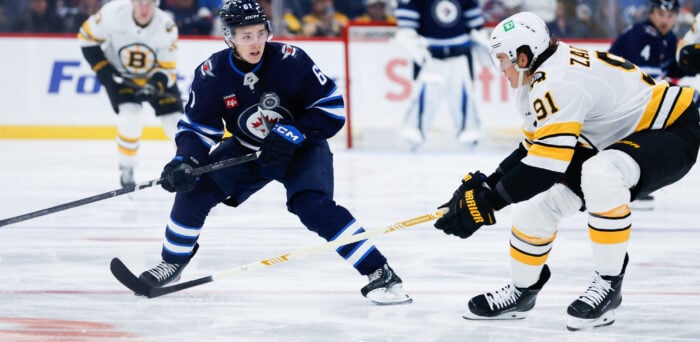
Viggo Björck is a remarkably clever and slippery player, who deserved to go as early in the 2026 Draft as he did despite his diminutive frame (5-foot-9). Björck has tons of skill with the puck, reads the play at a very high level, and works incredibly hard on both ends of the ice. If he was 6-foot-1 he might have been in the first overall conversation, that’s how complete of a toolkit he has at this point. There are obviously going to be questions about his ability to play his normal game against NHL competition at his size, but I think there’s a world in which he becomes at least 80% of what Nick Suzuki is now.
Free Newsletter
Get NHL Prospects coverage delivered to your inbox
In-depth analysis, breaking news, and insider takes - free.
Subscribe Free →